Baking
57 recipes
 Sharing the food love.

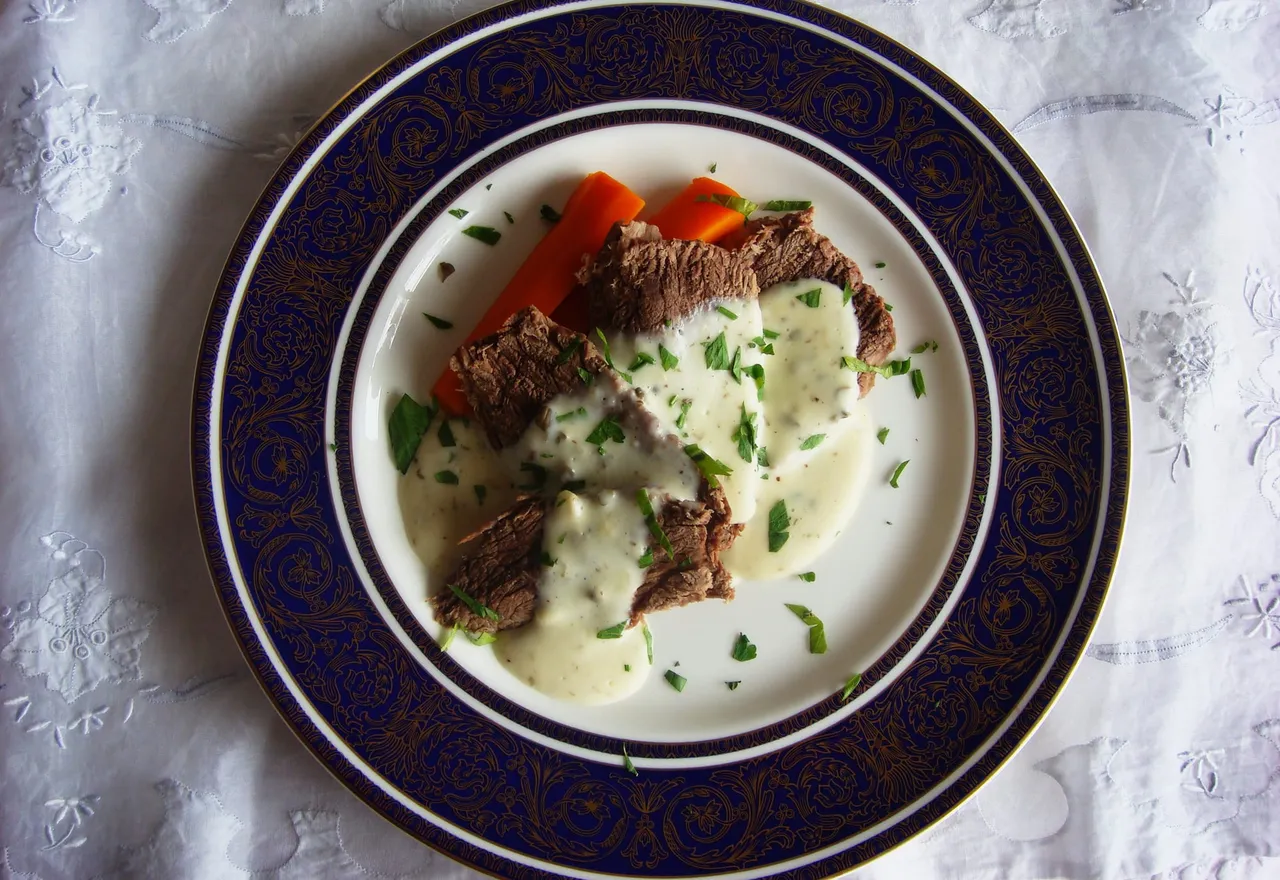
The beef is tender and has a lovely hint of cloves; the white sauce drizzled liberally over is traditional and very addictive! I recommend the capers in the sauce and parsley sprinkled over at the end. Perfect served with mashed potato and peas.
A fun Tastetip - cloves are the dried flower buds of an evergreen tree native to eastern Indonesia. It’s a versatile spice used in sweet and savoury dishes.
Recipe provided by Rosie Howard.
Serves 6 – 8. Freezes well.
Pictured: Corned beef with white sauce
1 ½ - 2 kg of silverside (Corned Beef)
4 - 6 peppercorns
2 tbsp brown vinegar
6 cloves
1 small onion
¼ tsp nutmeg
1 small bay leaf
1 carrot peeled and halved, halved again if large
1 tsp dry mustard
White Sauce -
1 tbsp butter
2 tbsp plain flour
300ml milk
Salt and pepper
Optional –
1 tbsp finely chopped parsley or
1 tbsp finely chopped capers or
½ cup cooked spring onions
Stud the cloves in a small onion for the extra flavour.
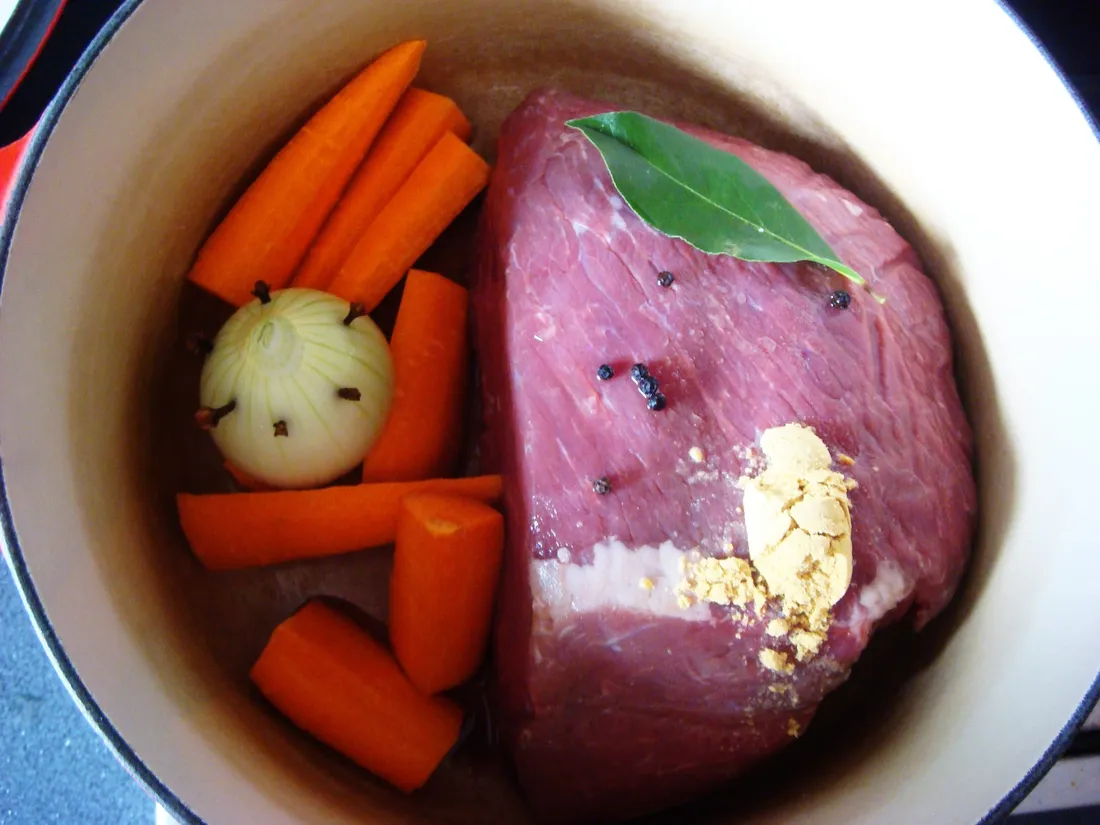
Wash meat and put into a large saucepan with all the ingredients.
Add enough water to cover and bring slowly to the boil.
Pictured: Corned Beef just prior to covering with water
Simmer covered until tender, must be as low temp as possible, a simmer mat can be useful at this stage - allow 1 hour per kg after it has reached simmering point.
To test, insert a metal skewer through a thick part of meat and if it comes out easily it is cooked. Let meat rest well in the liquid to stay tender and moist.
White Sauce – make a roux by melting butter in a small saucepan, remove from the stove, stir in the flour, salt and pepper to taste. Stir until smooth.
Return to the stove and stir for one minute to cook off the flour taste, but do not allow roux to brown.
Gradually add the milk, stirring all the time. A balloon whisk is handy to help stir out the lumps. Bring to a boil stirring while it thickens.
Add any optional ingredients at the end of cooking.
Serve corned beef sliced, with white sauce liberally poured over, scattered with the parsley, capers and onions.
TasteTip - Medieval Europeans enjoyed mustard to the extent their courts employed a special ‘Mustardarius’ to cultivate and prepare the fiery paste. ‘Keen and Sons’ were one of the first manufacturers of the English variety of mustard; their workers derived the phrase “as keen as mustard”.